Like this article? PLEASE +1 it! Evan Signature
Evan Carmichael Top Header about About Home Profiles articles Tools forums inspirational quotes About facebook Twitter YouTube Blog
Share for a Cause


A Very British Home Business

Guest post by: Leonard Tondel

Article Overview: I have been thinking about writing something on the subject of home business activity in the United Kingdom or Britain, since I founded a publication called The Business Opportunities Advertisers Report And Directory, (The B.O.A.R.D), almost twenty years ago. As the name implies, this was an assessment of the viability of ready-to-go, usually 'home' business opportunities which very often at that time just as to this day, came from the US. It soon became clear however, that many US promoters didn't know much about UK small and home business culture or many of the basic legal requirements. I hope that the following articles prove to be of some use.

Free Download - A Very British Home Business By Leonard Tondel
Name: Email:

A Very British Home Business

The Groundwork OR Preparation.


In recent BAD News reporting, a significant number of established businesses suggested they would shun trading with a start-up; if you are a start-up AND visibly running your business from home, matters become a lot worse. The trick is to get your foot in the door, to make that trip from your home to sitting in front of your future client. What befalls most home businesses is that they won't even be offered a chance, not even receive a second thought, let alone an invitation to pitch their wares.

Preparation and appearances therefore, become primordial. At the risk of over-simplifying, how about this for a home business preparation check list? (Offered in a rough order of priority).

Are YOU fit for purpose?

A lot of emphasis is placed on business tools for the job; of advice, technology and finance. However, it takes a certain type of person just to survive in business. You have to like people; and people have to like you. You need to be able to handle stress while avoiding ever becoming ill - because you won't have the time; to have the ability to bounce back, over and over again. You will automatically work long hours and not bat an eyelid. You will need patience and stickability. You will need to handle rejection and disappointment. Be able to invite a mountain of debt in the pursuit of your convictions. Alcoholism frequently rears its ugly head. I have seen families and homes break up when businesses go wrong. The closest of partners and friends can stab you in the back, usually, when the money really starts to come in and you think you've finally made it. Then, there are the subtleties and the intangibles. A lot has been written about the subject and I only wish I had the magic potion to sell - or sometimes give - to others. There are lots of authoratitive reports and books you can read and tests you can take. Finally however, you are likely to end up making an extremely subjective decision to give it a go, anyway, and after that, only time will tell.

Online assessment tool can be found quite easily and although they are usually free registration is usually required to use the assessor.

The professionals and educated will tell you of course, that business is a science. Like a casino programming the odds for a one-armed bandit. And they'd be right. On the other hand, the vast majority of successful, even wealthy business-people I have seen wouldn't be classed as 'educated' or 'professionals' other than by the greatest stretch of the imagination - unless you count what they have learned on their path to success, so to speak. Otherwise, they all started out as 'ordinary' people.

If you do succeed, you will be a statistical rarity, albeit a very satisfied rarity. For the majority, there is often little more reward than that; for many self-employed and home businesses, money isn't the main issue. Which is just as well!

I wish you luck. If you're like me, you'll need it. With a fair wind, go well.

Mind set.


Convinced that you can SURVIVE the vicissitudes of starting and running your own business? Then the next step is having the right frame of mind to SUCCEED in business and for this to be evident in your transactions with your potential suppliers, clients and general entourage. You have to become a business professional, if you will. If you are lucky, you might meet someone in the early days who you respect and admire as a business figure and you will hang on their words of advice and the way in which they behave. If you are really lucky, you might find this person is willing to become your mentor.

If not, you might become attached to a particular motivational author.

If you're not even that lucky, you could try giving yourself a credo. 'Business is just a game.' Or 'Play the game'. 'A profit a day keeps the debts away'. Or, more specifically, 'Effective selling is effectively, just making friends.'

Do not underestimate 'thinking like a businessman/woman'. It will be critical to your success and until such time you think the part, you'll never make it. (Anyone who thinks they can run a business from home doing 37 hours a week at £25 an hour or more needn't carry on reading this any further.)

War chest.


There's an awful lot of websites offering advice on starting a business suggesting that running a business from home is a low-cost, low-risk, soft touch option. That is extremely stupid and dangerous advice.

Apart from the rest of the headed, main list below, do bear in mind that you will also need to consider paying for the following:

Dedicated home business equipment and professional surroundings; assuming you already have a suitable computer and printer, add professional phone (with an extension/s maybe?), lighting, long-haul seating, decor generally, filing cabinets, stationery stocks, additional or spot heating. (Your heating bills are likely to go through the roof when it starts getting cold and you are sitting by a computer; not the same thing as turning your thermostat down to background heating only when going out to work regularly. Your electricity and water consumption will go up. You will almost always do more running around in the car. And so on.)

Training. There are lots of courses from lots of providers which could be deemed desirable if not essential to the successful development of a home business. Take your pick from subjects ranging from book-keeping to website design. A lot of courses are available free of charge from local colleges, official government agencies and private training providers and it's a wise home business start-up which considers the gaps in its education and does something about them BEFORE starting to trade.

Sadly, the majority of home businesses will try to patch over their shortcomings as they go along - a bit like Microsoft, for example, although YOU on the other hand, aren't going to benefit from unlimited 'governmental' funding. Yet, it's the vast majority which usually needs training the most, starting with a return to school to learn how to 'reed and rite' followed hopefully, by a few life and social skills.

Professional opinion is largely agreed that the vast majority of business start-up failures (think 2 in 3) are down to a lack of education.

It's a shame, when you think that most business courses can be obtained for nothing or at very low cost - obviously with exceptions - so you may have to dip into your war chest quite early on.

It's also a very good way to start getting a feel for networking and making new and useful friends.

If you are going to be asking clients to come around or you are going to stock goods, add not only suitable surroundings but also . . .

Home business insurance.

Possibly, business rates. Business rates become increasingly inevitable if you have an appreciable footfall of visitors, regular deliveries and collections, a significant part of your home premises is dedicated to your business activities, hold stock and/or your home address is visibly advertised as a place of trading. Consequently, if you're not sure, add . . .

Solicitor's advice. An initial consultation may be free (as offered by Lawyers for Your Business although there are only about 1000 firms participating in this scheme and there may not be someone in your area); if not, don't try to avoid taking advice; budget for it, instead.

Accountant's advice. (You knew about working from home and private residence relief for example, didn't you?) Once more, initial advice may well be free. The Home Business Alliance for example, has a professional relationship for the benefit of its members with AIMS, a national group of accountants. But again, if circumstances require it, don't try to cut corners or save a few pounds by not seeking professional advice. (See also the paragraph below referring to company formation, VAT registration and self-employed registration.)

Business banking. This area of activity is much more involved than simply opening a business bank account and possibly, a PayPal or other online account, etc, (more reading on the subject here and in your February 2011 issue of eBOSS for HBA Members) if you want to take money online. Excellent though PayPal is, we have found that taking payment by credit card whether over the internet, over the phone or face-to-face, remains a significant 'must have' business tool if only to cater for people who aren't familiar with internet banking developments or have an objection to 'non-standard' banking transactions. (Think mail order, direct selling variants from party plan to market stalls, and peoples' preferences and prejudices; and yes, I know that PayPal allow people to pay with a credit card but they have to hit that PayPal button first and a lot of folk simply neither know that or want to do that.)

PayPal apart, credit card authorisation from a traditional bank will not come cheaply or easily for a home business or a start-up, especially if you have yet to demonstrate any kind of turnover or your transactions are likely to be of low value. Quite a few hoops to jump through here and if allied to a business overdraft and/or business loan as well, this whole area of expenditure is likely to cost you an appreciable amount of money, regularly. (That's one of the reasons why banks always make a lot of money and businesses frequently go bust.)

Furthermore, you don't have to travel any further than across to the other side of the Channel before it becomes clear that once outside of the UK - and the States - the majority of your potential customers haven't even heard of PayPal and prefer to pay by cash, cheque or even bank transfer!

So. Do whatever you can to ensure that your customers are able to part with their money in your direction as comprehensively and conveniently as possible. In exchange - based on our own experience over the past twelve years or so and from what we've heard elsewhere - you could double your online takings over a PayPal arrangement alone.

On another plus side, setting up more traditional business banking arrangements could also bring you into contact with a professional who should be able to give you not only good banking advice but also point you in a worthwhile direction for setting up your home business generally, including some good local contacts. Assuming you manage to open an account with a bank which offers a personal level of service and which isn't just an internet facility, for example. Sadly, business banking relations management is becoming increasingly rare.

One more, very important thing. While going about opening a, or one, business bank account, open at least another, second business bank account either at the same time or as soon as possible afterwards. Then, keep both accounts active even if you will also be doubling your bank charges, of course; however, shop around and these may not be too onerous.

There are many reasons for two accounts - or even more under certain circumstances. Firstly, the old proverb that you shouldn't put all your eggs in one basket; business banking and lending policies can change overnight, requiring you to suddenly repay an overdraft or a loan, for example, which you have relied upon for years thus exposing you to the risk of foreclosure if you can't quickly do so. Terms, conditions, rates of interest etc will vary all the time and so you need to be able to access the best possible deal for your business when YOU CHOOSE to do so and not when the bank tells you to. You may simply fall out with your bank and suddenly want to go elsewhere. The bank may even call in a facility secured against your family home, for heaven's sake. But above all, the majority of banks have proven in recent years that they are the worst possible guardians of your money and business interests and should be treated with the greatest of caution at best - if not outright contempt.

You cannot afford to jeopardise the survival of YOUR business by relying on institutional serial offenders who deliberately run up trillions of pounds/dollars/euros of toxic debt to sustain their cancerous bonus culture. In fact, with a Prime Minister (David Cameron) whose family fortune comes from banking and who predictably hasn't made the slightest attempt to even bring UK banking controls in line with his European counterparts, the best advice I could give you is to use banks for their services only, buy gold and keep it buried in a hole at the bottom of the garden. That way, when the world's financial system finally collapses, you should be OK. (Depending upon a few other home business survival factors as well.)

In the mundane meantime, having a couple of banks in the bag means that you should be able to ride out most specific banking service problems seamlessly and quickly with a minimum of, or no inconvenience to your customers.

There are some very good banks, of course, which do not fall into the above category. We have used the ethical Co-Operative Bank for many, many years and are absolutely delighted with their business banking. And there are others.Just google 'ethical banking'.But do make your choice very carefully and remember that your money is YOURS - so keep it that way.

A little N.B. Personal credit cards. I don't know anyone who doesn't or hasn't used a personal credit or debit card for business spending. I'm not going to try and change the flow other than to suggest that from a book-keeping point of view, make sure this kind of borrowing and spending stays transparent and accounted for. One of the objectives of any business is to develop something of value, something which you could sell at a later date. So make sure it all adds up.

Then finally of course, you wouldn't offer your family home as security against a bit of placcy, would you?

If you do find yourself in debt, the best way to avoid any problems is to bone up on the consequences beforehand. (Eh?) A couple of HBA members, Jill Bray and Steven Maoudis, have written some excellent excellent work on the subject and Jill's guide was serialised in The BOSS.

Then, there is Data Protection registration. It may or may not affect you as a home business but check out the official website and at least get in the know.

Trips to and from clients/networking/other business meetings which you may - or may not - be able to tie in with the need to buy in family shopping as well as trips for supplies for your business. In our experience, many trips for domestic purposes, taking children to school or the childminder, for example, can be combined with the daily routine of going to and from work. When working from home, business trips usually become specific and therefore, have a significant impact on your budget.

I would be surprised if running the average business from home does actually - as is often suggested - equate to a more planet-friendly option or prove to be more economical than simply travelling to and from work every day. It depends. Individual circumstances can be very different. There are plenty of people commuting in and out of London who pay £5000 a year for the privilege of standing up in a rolling shit-pit for a couple of hours a day. But when I see millions of cars circulating with just one driver behind the wheel, moving backwards and forwards at the same time morning and evening every day, topped off by widescale throwing of food into dustbins, then there is still a lot of scope for planet-friendliness before appealing to everyone to work from home - in which case, the utilities wouldn't be able to cope, anyway. Consequently, if you want to run a business from home, don't be under any illusions that it's going to save you money. It's possible but . . .

. . . now that that's the 'due diligence' part covered, read on for some more typical home business expenditure.


Firstly, it is common for start-ups to fail and coping with that possibility should be a fundamental part of your short to medium-term business strategy. What is much more important than failure is the ability to recover so it's critical for example, that you don't re-mortgage your house or borrow too much money or make a start with something which seems like a good idea but which you haven't market tested.

Just as with the right kind of mind set, your ability to prospect for business will be markedly improved if you're not sweating cobs at a sales meeting because you have absolutely GOT to get the deal done as otherwise you won't make your next mortgage payment. In which case, it will have been the seventh time you will have struggled this year, your lenders are pressing and the wife and children are threatening to leave, etc, etc. YOU may think you can poker-play these situations. The guy or gal facing you, won't necessarily have the same view.

Consequently, your war chest or financial cushion, call it what you will, remains critical. Not just to pay your bills in the interim as you establish your business activities but because you need to invest in your home business 'shop front' to help you get your foot in the door. ONCE AGAIN, try to avoid an overdraft or business loan at least until you have got some kind of trading activity behind you and you can see how the money flows. (Grants for home businesses being non-existent).

Your 'shop front' will usually include an assortment (if not everything) from the following list and are items which you SHOULD pay out for BEFORE you can start prospecting confidently; otherwise you are going to risk giving a bad or at best, mediocre impression from the very outset when you should in fact, be arriving on the scene with a very favourable, 'big bang'.

Business club/Chamber of Commerce/association membership.

In this day and age of the internet, paid-up membership of the business community is a highly underestimated primary stage not only of 'doing the diligence' but also, of establishing yourself in that community. It is an essential part of the learning curve and a highly likely source of business from other like-minded people. Facebook, Twitter and other social networking media are absolutely no substitute for real-time belonging. They are not as time-efficient, they are not so instinctive and they are almost certainly not as potentially profitable.

You can do a lot of 'diligence' for free on the internet (assuming you can wade through and even discern all the rubbish) but in playing the game properly, you finally need to pay your subs. Don't hesitate and in fact, funds permitting, join up whatever and wherever you might think it's appropriate to do so. (Although I could easily tell you some horror stories about some business clubs so DO ask around to see what your peer group thinks.)

Having said that don't forget that membership of a business club or association is, or should be, a pro-active and interactive step. What it gives you will be the sum of what you put in. If you prefer to stay at home watching The Apprentice or Dragon's Den then don't expect a membership to give you a return nor expect your home business to succeed.

Private Members' Club.

At first glance this might seem totally excessive but just stop and think for a minute. Where are you going to meet with potential clients? We have members who live in mansions, chateaux and castles which is more than OK for a business venue but what about you?

For those of you who belong to professional or career institutions, prestigious premises are often part of the deal. The Institute of Directors, for example. OK is you qualify for membership. OK if you are going to meet in London. OK if you're not too picky about the food generally.

However, for the majority of folk, private members' clubs are much more accessible (unless you live in a smaller town or rural area, in which case it will depend on where your client is to be found rather than where you live) and unless you want to put a quick end to your home business prospects by arranging a meeting in your living room over a can of Fosters, give a LOT of thought to where you are going to have your meetings. It goes without saying that somewhere with a bit of cachet is always a lot better than a pub bar or Starbucks. Especially if you want a decent cup of coffee. There are other options as well, of course, but it all depends on location and accessibility. A client will go the extra mile to see you at a private club; he may not budge if you suggest a hotel.

Subs vary but you may be pleasantly surprised at just how affordable some clubs can be. (Although do try to avoid private clubs which are 'fashionable' or 'current'. You are looking for a venue which is quiet and comfortable and not somewhere to rub shoulders with loud-mouthed riff-raff.)

Company formation/VAT registration.

A limited company will always create a better impression than someone who is a sole trader/self-employed, just as will VAT registration, voluntary or otherwise.

There are however, a number of critical, additional considerations such as personal liability as well as profits and this is one of those times where it is essential to get the best advice, heed it and pay for that advice if necessary; circumstances can be highly individual and there are no short-cuts I for one, would want to take. Not in this case. So, ask around at your business club/s, take a couple of hundred at least, out of the kitty, and go and speak to a good book-keeper or accountant and/or solicitor. Then, lay your cards on the table and be honest. Don't dream out aloud.

It may be the case that you will be able to get an initial consultation for free; so much the better. (See above also, under Accountant's advice). But if the local consensus of business opinion is firmly behind a professional who does not offer a free initial meeting then don't baulk at taking out your wallet.

Having said that, there is no doubt that the large majority of home businesses choose to trade as 'self-employed'; once upon a time, this was no more complicated than simply deciding to do so but nowadays, HMRC registration is required for self-employed newbies and for information on how to go about this the Business Links section on starting up is as good a bet as any. Beware of non-official websites giving start-up advice where information and links are less than comprehensive, frequently out of date or dead. (Even the British Library's 'Business Essentials Wiki' which we looked at recently, is seriously unfit for purpose.)

Official address.

If you decide to form a company it is often the case that your official address will not be your home address. Accountants' or solicitors' chambers for example, are just fine.

If you are still lumbered with an 'unsuitable' home address (depending once again, on your type of activity), you will want to find a more impressive accommodation address. Not just to stick on your stationery and website but to have your business mail sent to, as well. This will only come at a price. Rates vary enormously but be guided by recommendation rather than price, if possible.

The other option is to have a pre-paid business reply or Freepost service but that can prove to be more expensive than an 'address of convenience'. That notwithstanding, I have always found that business reply services are well worth paying for; once again, it's a business facility which sends out the right message.

If you are going to be trading mainly locally, you might be lucky enough to come to an arrangement with an established business which has a spare room or whose professional facilities you can share on an ad hoc basis. I once managed to negotiate a deal with some local architects along these lines. They had a desirable address and the eminently affordable arrangement worked very well for a long time.

Business telephone number and telephone answering service.

Forget about using your personal mobile number for clients, either potential or existing, to call you. You will need a land line and a human being to answer the phone for you when it rings and you're not there. Hopefully, very often indeed because you are always out drumming up business.

On the basis that family or friends are the last people you want fielding your professional calls for you and that the answerphone should only come into use very rarely indeed, you will need to think about a personal PA. I know you can use call diverts to your mobile, etc but to give any kind of dimension to your home business activity, you will need to be able to offer your clients a PROPER call answering service for your very own business telephone number.

A good service however, is like gold dust. One which knows you, your business, can handle customers yet remaining affordable, is to die for. I think it took me six years to find such a service at one stage. And it didn't come cheap, although a suitable business address and mail handling service were included so the final solution was more than satisfactory. After doing a LOT of asking at your local business club or Chamber of Commerce, divvy up some more funds out of the kitty.

Directory listing. Once you have got your trading name, official address and phone number sorted, it's time to put yourself into a directory or two. Once upon a time it was as simple as the White and Yellow pages and job done! You were on the business scene. Now it's a lot more complicated not only because the internet offers a lot of additional choices and variations but because business start-ups themselves often do things on the cheap and in the short-term and change their official addresses, phone numbers, emails etc as often as a normal person would change their socks.

If you are not going to be able to guarantee your contact details for at least a couple of years (as best you can, anyway) then there's no point in trying to get yourself into a business directory, even on the internet. In fact, you might even ask yourself the question if you are being serious about getting going in business.

On the other hand, it's amazing how many people get suckered into paying to appear in 'European' or 'International' trade directories which they have never seen before in their lives and which take usually, around £100 off you for your stupidity. Holland used to be the main source for bogus business directory scams although I've seen offers coming from Russia and Spain as well.

Having said that, perfectly genuine local, trade and specialist directories do exist and you will have to pay for an entry. But do your research first; ask your trade association or Chamber of Commerce if you aren't sure.

By the way. Business, address and telephone directories are an excellent way of telling at a glance, who is doing what in your area, who the competition is or might be and where there are some potential gaps in the marketplace. Whether or not directories these days are a useful source of business referral may be a moot point; on the other hand, there is no doubt that they are an excellent source of business intelligence.

Business uniform.

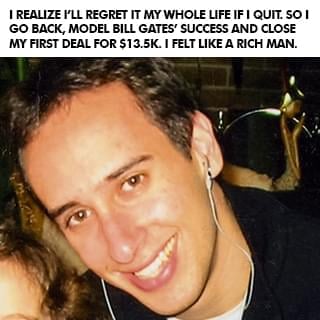
Clothes maketh the man. (That's me in the pic, by the way. Ahem.) And I would emphasise 'the man' because I don't remember ever having seen a woman turn up at a business meeting badly dressed.

There are some men unfortunately, who feel they have to look modern. Currently, that seems to be a cheap double-breasted jacket tailored in Rumania, pre-stressed jeans courtesy of child labour in Pakistan and North Africa, perhaps a v-necked jumper hinting at a pallid chest, bottomed-out with a pair of pointy brothel-creepers manufactured in a Chinese sweat shop.

It's very simple, really. Business meetings are the moment to show and reinforce the notion that you are a business professional and NOT to make a dubious fashion statement.

The impression you create will have its maximum effect for (schools of thought vary) twenty seconds or so? In which case, don't complicate your chances. Without knowing who you are going to be talking to, it's more than likely it will be someone like me. A bit old-fashioned, ideas and trains of thought already well established by the passage of time. Knows what he/she knows and knows what he/she does and doesn't like.

So stay conventional. Not necessarily a suit. A dark jacket, plain shirt and tie and good quality trousers with a pair of normal-looking shoes will more than do.

If you can afford to pay the extra, get the best jacket possible. One which is light and with plenty of movement because it is important to feel comfortable in a wide range of positions. If your clothing is a bad fit, you will start to struggle and once again, it just shows you to be an ill-prepared amateur.

You can spend a fortune on what I would describe as your business 'uniform/s'. On the other hand, I have seen top-quality Italian suits in charity shops, of all places, costing next to nothing. If you are of an average size, you shouldn't have to spend too much. The problems start with people like me!

I have also referred to your business clothes as a 'uniform' because these are clothes which should be kept and used for the purpose of, only. (If at all possible.) At some stage, you may receive a late-afternoon call to go along to a meeting in London first thing the next day. Full of hope and expectation, you set your alarm to go off at 5am the following morning whereupon you get out your clothes. And you find a stain on your jacket lapel; crumpled white-ish shirt with a dirty collar; the trouser belt is missing; and you haven't got any clean pairs of socks left. The shops are shut that early and you won't have time to get anything done after you get off the train. Your better half seems asleep and anxious for you to get gone so she can carry on sleeping. Roll on!

Oh. And the watch. I have seen so many Dell-Boy Rolexes on wrists since the internet came along that I've developed a lurking suspicion that the original factory may have had more than a hand in the matter. So to speak.

Anyway, someone who has the money to pay for your business services or goods is also likely to have the money to buy a decent, genuine watch. And to spot a decent, genuine watch. Or otherwise. If you can't afford the real thing don't tempt fate. Better not to wear a watch at all. I never do and I can't say I've noticed it affecting my conversion rates too much.

The portfolio/presentation/sample

You're going to do a computer presentation, right? Just like everyone else. Trouble is, I have seen as many computer presentations go wrong or have problems as I have seenthem go smoothly. Most people simply don't know what they are doing. They've got Microsoft Office and that's it. End of.

They don't check to see if their batteries are fully charged. They find they can't get a wi-fi signal so they have to ask their client for an internet connection. Unless the meeting is taking place at a hotel and there isn't a socket available where you're sitting - and all of a sudden you haven't got a presentation to make at all. The screen's desktop is overloaded with icons and so it takes ages for pages to load and move forward. There are four people facing you and only one of them at a time can really see what is happening on your screen because of reflection and poor lighting angles.

By all means prepare a computer presentation even if PowerPoint is now considered to belong to the Stone Age - if it is really going to help. But research your methodology well. Keep it snappy and simple. Keep the graphics and images nice and big so that they can be seen and read from a distance. Practice your 'show' a few times on friends and family, first.

But at the end of the day, do you even need a computer for a presentation? What about a simple portfolio approach, instead? Prepare a master, A4 sized at least and once you've got something which looks the job, produce several smart copies to pull out of your briefcase at will during your meeting, depending on how many people are there and whether or not it is appropriate to leave something behind - in addition to your classy business card.

A portfolio is much more flexible than a computer. Once in his or her hands, a client has control of what he or she wants to see, dwell on or return to. You don't have to make that choice, leaving you free to expand on your client's questions, taking the pressure off you to lead the sale all the time. Several different people can also be looking at different pages at the same time if they want to. (Not to be encouraged from a purist's selling point of view but you know what people are like!) It's also much easier and cheaper to leave behind a file than a laptop! Once you've gone, the client can go back to your presentation whenever they feel like it and your portfolio is working for you, even if you're not there.

On the other hand, although a portfolio has every possible advantage, it is something which once again, has to be prepared carefully, thoroughly and professionally. Use good quality, thick paper; number your pages; add an index; personalise the cover if possible; make sure everything is nicely bound. If in doubt, get a local print shop to help. On the other hand, if you want to do it all yourself there are endless sites on the internet which are full of good advice and ideas. Click on the image aside for just one of them.

There are business sectors which have their own peculiarities. If you're turning widgets on a lathe in your garden shed, you may want to prepare a sample for a potential buyer. Don't do what British manufacturing (R.I.P.) used to do and offer up a hastily-prepared, unpolished lump of metal presented in a Tesco carrier bag with the excuse, 'We'll get that properly sorted for the production run.' Make it the finest piece of work you've ever done. Put it in a custom-made box with a printed label on the lid. If you're a clothes designer, adopt the same approach. Don't just drape your sample across the back of a chair. Check every stitch; steam it; fold it impeccably; box it; name it.

Once again, it's going to cost a little bit extra. But it'll be well worth it.

Now if you have been astute and very lucky you're probably only up to around fifteen hundred pounds or so out of the kitty at this stage. Next however, is that element which a lot of people consider to be essential these days. The website. And this is where you can blow your budget to pieces.

The website.

In this day and age, your home business armoury must try to include a website. 'They' say. It does depend very much on your sector of activity. There are many which don't NEED a website to start prospecting and selling. No more so than a computer. You must be the judge but if on a tight startup budget, a website can prove an expensive luxury.

We are not the experts here even though we manage our own websites and have been at the top of the search engine rankings for over a decade. However, there are people who know a lot more than we do about the internet and so in this case, do by all means, take their advice. A lot of advice. With our best wishes on finding someone who knows what they are talking about, can deliver the right quality on time and is affordable for a home business.

There is a UK scheme called the Get British Business Online initiative which will supposedly get you going with a website for free. However, I have never received any feedback on this service so I leave you to have a poke-around at your own discretion.

Business stationery/business cards/business logo.


Website all done and dusted? Got a few pages which actually work? In other words, your url doesn't produce 'Site Under Construction' plastered across the home page? Good. Almost the final stage, then. You can now sort out the business stationery, etc.

Although there are some very impressive online or electronic stationery packages available, don't forget to have something prepared for face-to-face business, as well. But please, do it properly. If ever I have seen an amateur in the world of business, it's someone who offers me a curled, flimsy business 'ticket' spat out by a cheap desktop inkjet printer. You might as well turn up at a meeting with 'cheapskate' written across your forehead

For what it costs these days, do make the effort - and it's really not much of one - to have your business stationery designed and printed by a professional. We for example, have a whole bank of top-end laser printers costing several thousands of pounds each and could do a better job at producing our own stationery than the vast majority of people but when it comes to the crunch, we can't for example, feed over 300 gsm+ card, which is what you will need for a decent business card.

Furthermore, until you know your stationery specs, don't try to buy for the first time on the internet. You need to feel the stationery and judge its weight to get it right. Feel is every bit as important as appearance. Then, look at your samples in varying shades of light.

You might think that stationery these days is a bit old hat, that e-mail has taken over. The trouble with email is that a lot of design work, let alone the entire message, might get chopped by the spam, key word and image filters your client has running on his Inbox; and of course, all the sheep and lemmings use email these days. If you want to make a statement, be different, a cut above the common herd, don't hesitate to send out a good 'ole fashioned letter every so often, especially if you're quoting or confirming a deal. It'll make you more memorable, maybe just different enough to get the business ahead of the competition or to get a second bite at the cherry.

Then, when you're face-to-face with someone, it's nice to be able to leave them with something which appeals. The business card culture isn't at all developed in Britain but assuming you will want to expand your horizons at some stage do be aware that the business card is a fundamental part of establishing yourself. Don't forget you will only have a few seconds in which to make an initial impression. Don't louse it up with a crappy business card.

There are always lots of promotional offers for business stationery doing the rounds but if you want a pukka job, budget once again, a couple of hundred pounds where the design element will be the most costly. At the same time however, aim to be getting a business logo, a masthead out of the deal in which case, it would be money very well spent, indeed.

And make sure that when the job is done, the printer will let you have all the design elements on a CD because that is what you have paid for and it's YOUR property.

Professional Indemnity insurance

As more and more professionals work from home, so more and more home businesses are becoming increasingly high value and high liability, making professional indemnity insurance a very important consideration. Some sectors won't even touch you if you don't have this kind of cover.

If you have any questions at all, speak to an independent or specialist insurance broker. (If PI is recommended, then it's very serious kitty time again.)

Right. Ready now? Everything has come together. ALL the components are in place? ie You're not going to try and prepare a portfolio while keeping your customer waiting a few days? Or need to find the money for a day return on the train to London? Good.

Making the break or, getting out.

On the basis that you have decided on what kind of business you would like to run - and that can be a marathon in itself - you will eventually need to decide to take the plunge, leave your regular job and commit to a business full-time. IF that is what you want to do. On paper, it's possible to taper into full-time business activity from part-time or while holding down a full-time job but in practice, I've rarely seen it done. Money which you set aside from part-time business sales will usually go on helping pay day-to-day bills; had some good sales? Then it's only natural to 'treat' yourself or the family rather than invest in business development. And so on. If you have got the will-power to separate out the two activities and keep them separated, then congratulations. You've got more self-control than me.

What can work well is a big, all-the family-together-now, sell-out at a car boot or on eBay to raise some working capital. It's surprising how much can be lurking in the garage or the loft which can be converted into a few bob and it's all a good exercise for raising awareness among the entire family that this home business idea of yours, is serious.

Financing apart, do then bear in mind that you will not be able to juggle your new customer priorities with the demands of full-time employment. Once or twice, maybe, but not in the long run.

Perhaps you can make a gradual shift towards a full-time home business with direct selling opportunities, but there you usually have a tried and tested formula and structure to guide and support you. The other formula which will usually work is that the 'other half ' continues to go to work and assumes the lion's share of the family's financial responsibilities. But it is normally a long haul. Think in terms of three years or longer to become established. If you can make it faster, congratulations again.

Consequently, at anything between a couple and several thousand pounds already spent on the preparatory business trimmings, you will now need a lot more than that to pay your way until your home business starts bringing in some serious money. But it won't start bringing in serious money until you take the plunge, start getting out and working at your business double, even treble-time. So it's Catch 22.

The ball is in your court.

Have a final think about whether or not that spare bedroom you want to turn into a home office might be more productive let out as lodgings or bed & breakfast.

At the same time, take a look at what your local or a nearby authority might be offering as business or start-up workspace where, if my own experience is anything to go by, the cost of an all-inclusive package can easily be MUCH cheaper than setting up at home. (Homes are not designed after all, for running a business.) Perhaps your priorities are more lifestyle and not purely down to running a profitable business: but very often I come across start-ups who think that a logical progression is getting going from home and then moving on to bespoke business premises. That COULD be putting a dog-leg into the straightest possible path.

Still determined to have a go from home? Well, once you've lashed out for all the necessary bits listed above, the next stage is getting out to drum up the business. Seriously. It's not going to happen if you are going to sit at home.

Related Articles
  The winter is going to be tough for people in the United Kingdom
  Gas bills go up by 18% can we take any more
  100 Ways to Succeed #89
  Havens From Hypocrisy
  Relationships
  Blogging for an international audience
  Six More Crazy Stories
  What is your self-estimate?
  Have I Got Work-Life Madness
  The Complexity and Power of Words
  Entrepreneurs – Is It A Window Of Opportunity Or A Brick Wall?
  Top tips to buy a franchise
  What makes the UK housing market so attractive to foreign investors?
  Cultural Intelligence - Or The Art Of Avoiding “FARTFULLNESS”
  A case for rebranding - catalysts for brand revitalization
  Are You Giving Up Too Soon
  The Positive Side Of Recession
  Think Global Act Global Writing for Your Online Market
  Please Someone Shoot These Buzzwords!
  Franchise My Business UK

Home > Home-Based-Business > Leonard Tondel > A Very British Home Business >
Article Tags: home business opportunities

About the Author: Leonard Tondel
RSS for Leonard's articles - Visit Leonard's website

Although I would like to write for you, let me point out that I am not a qualified business adviser (and I'm certainly not a 'guru'.) Consequently, if you are seriously contemplating launching a full-time, profit-making business from home - especially in the UK -  then I would wish to stress the importance of using the services of an experienced business adviser as part of the due diligence needed for this kind of venture.

On the other hand, I started in 'home business' when eight years old and my parents decided to become 'their own boss' - not for lots of money or an easy lifestyle (these were not valid considerations just after the Second World War) but because they wanted to be independent. It then became a simple case of the whole family pulling together in pursuit of that as a common goal. (Plus they didn't speak English well enough to be able to get a 'decent' job.)

Consequently, I have been 'selling' for over 50 years and during that time I have also interviewed thousands, if not tens of thousands of people trying to 'sell' themselves to me and my various colleagues. My accumulated experience also seems to have been adequate enough to see me in front of politicians, the Bank of England and household-name sponsors and to have helped form the UK's first and only national credit union for small businesses.

However, let me emphasise again that the guidelines I offer in my first set of articles are for people wishing to start a home business in the United Kingdom/Great Britain.

We have a lot of visitors from all over the world but the US, Russia, France and .eu domains particularly and so anyone who is not from the UK should use my first articles accordingly. Contrary to the claims advanced on most Anglo-Saxon business websites, the entire world does NOT speak English and laws, regulations, customs and practices vary enormously from country to country, even within the European Union (EU).

On the other hand, the European Union, including Britain, is the world's largest developed marketplace and so an effort to jump through some hoops, might be called for.

Go well.

Len Tondel, Chairman, Home Business Alliance. http://www.homebusiness.org.uk


Click here to visit Leonard's website
Dashed Line

More from Leonard Tondel
A Very British Home Business


Related Forum Posts
Re: How do you budget your life? Re: How do you budget your life? - Here is my financial management categories for today: 15% Long Term Savings; 10% Home Expenses; 45% Business and Marketing charges; 10% Friends (Meeting); 20$ Scientific and Law Books. But this will change when it is August or September. Orxan
My entry My entry - 1. The Best Business Books Ever: The 100 Most Influential Business Books You'll Never Have Time to Read - this is a fascinating book about the history of Business theory, and I'd recommend it to anybody. 2. The Big Book of Small Business: You Don't Have to Run Your Business by the Seat of Your Pants, by Tom Gegax. Ditto. 3. PADI: The Business of Diving Book Okay, so this book won't be of use to anyone who doesn't want to start a scuba store, but I did, and this book was of course invaluable to me in reaching that goal.
Re: Trade Shows - Are They Worth It? Re: Trade Shows - Are They Worth It? - HI, I have used trade shows (not participated) to collect potential clients. For example, the Home & Garden Industry is extremely behind the time in regards to their websites. I attended an Home & Garden Expo in Denver and collected all the companies contact information. I plan on cold calling & mailing information to each business. It also gave me time to research the industry more, talk directly to the owners in many cases, and learn more about what they need. Jeff
Re: Hi there! I'm Shanuna Cortez Re: Hi there! I'm Shanuna Cortez - Welcome Shanuna to the club. We will like you to post and let us know more about British Entrepreneurship Society
Re: New McDonalds McCafe concept... Re: New McDonalds McCafe concept... - When it comes to Japanese service and quality control, I tend to take it for granted... until I return to Britain! Mind you, when it comes to cafes... You can't beat a good old British tea shop!




Share this article with your friends. Fund someone's dream.

Leave a comment below or share on the left and you'll help support entrepreneurs in Africa through our partnership with Kiva. Over $50,000 raised and counting - Please keep sharing! Learn more.


Featured Article

Bottom Footer


Newsletter

Get advice & tips from famous business
owners, new articles by entrepreneur
experts, my latest website updates, &
special sneak peaks at what's to come!
Name:
Email:
Popular Articles

International Employment Background Checks

The Difference Between Management And Leadership

Selling with Humor (and a Sorry Butt)

Suggestions

Email us your ideas on how to make our
website more valuable! Thank you Sharon
from Toronto Salsa Lessons / Classes for
your suggestions to make the newsletter
look like the website and profile younger
entrepreneurs like Jennifer Lopez.